
2026 Seed Collection
This is the first year in a long-term project to curate a Living Seed Collection for the Portland metro area. We hope to gradually build a collection that is actively maintained by local growers and their communities. We are also developing an accompanying multimedia “cultural memory bank” to share seed and food stories.
This seed collection is meant in part to support and encourage seed growers who have barriers in leveling up their seed keeping work. Many of our growers are professional farmers but many have limited experience in “formal” seed keeping work. We are all practicing and leveling up our seed keeping work.
We plan to continue expanding and improving this collection. If you’re interested in collaborating, check out the Get Involved page.
Thanks for your support!
Our 2026 Grower-Partners
Good Rain Farm is a diverse operation focused on vegetable production, native plant propagation, and Indigenous First Foods. We primarily grow mixed vegetables and Indigenous crops, cultivating them through sustainable practices such as low-till methods, cover cropping, and regenerative soil care. Our marketing and sales outlets include a CSA program, local farmers markets, and direct-to-community sales. Our CSA, Save Our Seed, prioritizing culturally relevant foods and education.
Michelle Week (she/her) is a returning first generation farmer. She believes stewarding the land, decolonizing diets, connecting with her ancestry’s cultural traditions and feeding people is her way to help restore our community’s food sovereignty. She’s excited to be a member of the next generation of farmers and excited to build a cooperative business that helps build and support the cooperative and solidarity economies for a more just and healthy future for her community.

Kay Everts (she/her) leads a group of passionate volunteers who grow seeds for the Clackamas Seed Libraries at the Oak Grove New Urban Farm with a focus on adapting crops to our changing local environment. This team builds community and strengthens our local food system through the annual Adopt a Crop program.
Katie Gourley (they/them) is a farmer, seed grower, and baker based in Portland, Oregon. They run La Merenda Farm, a small scale dry bean project. They grow heirloom dry beans and seeds with a special interest in biodiversity, regional food systems, and preserving seed and food legacies. Katie believes seed saving is an act of care—for land, culture, and future eaters.
Tanager Farm is a CSA farm growing diversified vegetables, flowers, seeds, and community in Corbett, Oregon. The farmers are Brindley Beckwith, Spencer Suffling, and Adrienne Hohensee.
Spencer(he/him) is a farmer, educator, and organizer living in Portland and farming in Corbett. His first passion is in learning how to grow delicious food ecologically, in collaboration with nature. In recent years he has become engaged in farmer organizing, seed keeping, and oral history documentation. His intentions for the future are to develop a training and resource Seed Hub to help support local seed growers.
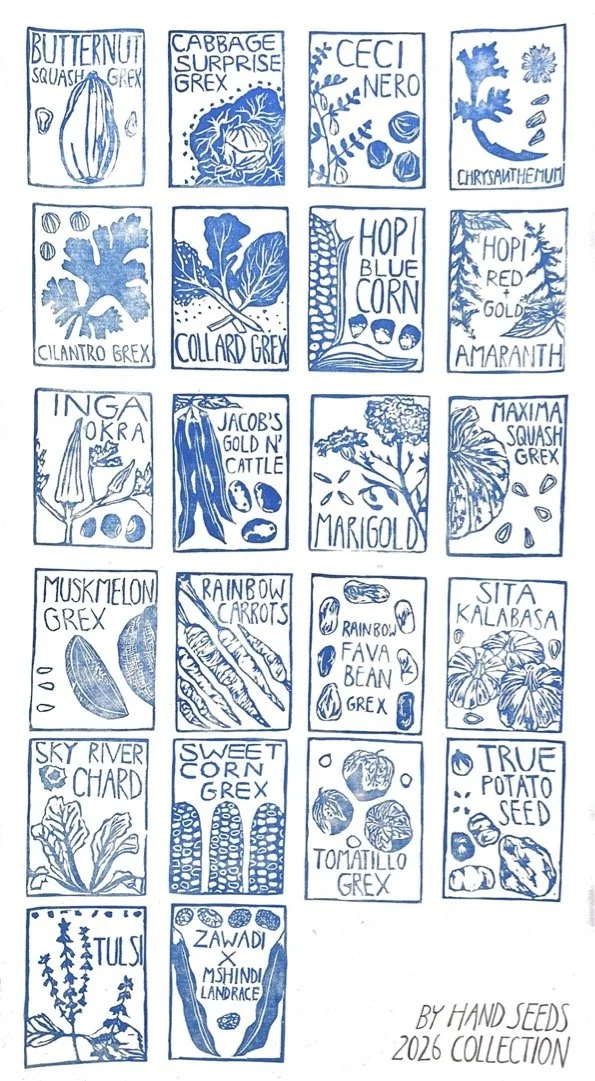
Adrienne(she/her) is excited to be growing, learning, and organizing collectively as seed keepers. She is a mixed Chinese grower interested in reimagining diasporic, migratory relationships with crops and land through seed work. She developed the prints for the collection and is eager to explore seed saving as an art.

Da (she/her) is a Filipino-American farmer, caregiver, and migrant organizer who loves a good story! She is passionate about interrelating the work of tending land with the task of strengthening the power of the collective, which is how her Precious Seedlings Farm came to be. She believes seed keeping is birth work, and that we should pay close attention to the lessons seeds share with us about change.
Sugan (he/him) is a farmer, organizer, and youth mentor based in Portland, OR and Hillsboro, OR. Although Sugan leads the seed keeping work at Working Theory Farm, the work of cultivating seed diversity and regionally-adapted heritage crops is a collaborative effort. At Working Theory Farm, seed saving is a shared task that connects youth and elders to the migration stories of people, plants, and culture. Sugan would like to honor the many hands and histories that led to Working Theory's contribution to this project-- terima kasih to the youth leaders, elders, and staff. Pokok tidak akan tumbung selagi akarnya kuat-- a tree will not fall as long as its roots are strong.
Browse the Collection
Find our seeds for sale at SymbiOp Garden Shop (3454 SE Powell) and Partly (640 SE Stark). Contact us for bulk or special orders.



Maxima Squash Grex
Cucurbita maxima
Grower: Tanager Farm x Clackamas Seed Library
Profile: Our population of Cucurbita maxima is a collaboration between Tanager Farm and Clackamas Seed Libraries’ Adopt a Crop program. This “flock” is grown, tasted, and selected by local community in order to collectively breed a diverse winter squash that tastes great and thrives with minimal inputs. We prefer direct sowing seeds in the ground in May when the soil has consistently warmed up.
Muskmelon
Cucumis melo
Grower: Tanager Farm - Corbett, OR
Profile: This diverse population of melons produces fruits with a range of colors, patterns, and flavors. Our Muskmelon Grex descends from a wide mix of cultivars, selected for healthy plants with medium to large fruits that taste great, and produce a good crop in our cool microclimate. We prefer direct sowing seeds in the ground in May when the soil has consistently warmed up.
Rainbow Fava Beans
Vicia faba, broad bean, faba bean, field bean, tick bean, tic bean
Grower: Tanager Farm - Corbett, OR
Profile: Our fava population includes huge genetic diversity that has been selected for multi-use plants that need minimal water. Favas likely originated in the eastern Mediterranean, but grow well here in the Pacific Northwest. In mild conditions favas can be planted in late fall, but we usually plant in March to enjoy a harvest of greens, fresh pods, and colorful dry beans.
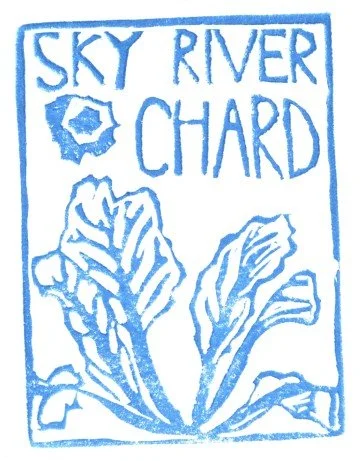
Sky River Chard
rainbow chard, Beta vulgaris
Grower: Good Rain Farm - Troutdale, OR
Profile: Sky River Chard carries every color of the watershed—sunrise yellows, salmon pinks, rhododendron reds, deep river purples, sunset oranges all set against rich forest greens—flowing through each vibrant stem. Chard traces its origins to wild seabeet along the Mediterranean coast, where generations of growers selected for resilience and color, eventually giving us the brilliant rainbow forms we cherish today. At Good Rain Farm, we honor this plant for its abundance and beauty; it still amazes us that nature placed so many colors into a single seed. If we were monoculture growers (we’re not!), this is the one crop we’d grow endlessly: stunning, prolific, and joyful to harvest.
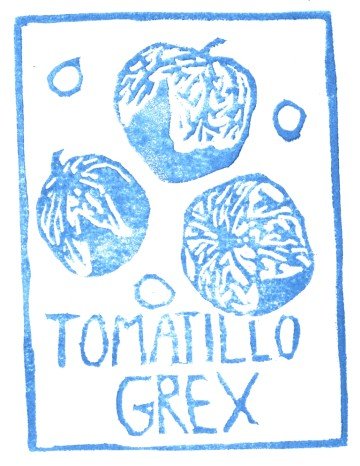
Sweet Corn Grex
Physalis genus
Grower: Tanager Farm - Corbett, OR
Profile: Our Tomatillo Grex population is selected to have tons of diversity while producing high yields of green fruits for salsa verde. Tomatillos are native to Central America and Mexico and love heat, but adapt well to our cooler northwest climate. We sow seeds in trays around April 1 and transplant at 3 ft spacing when the soil warms up to around 70 degrees.
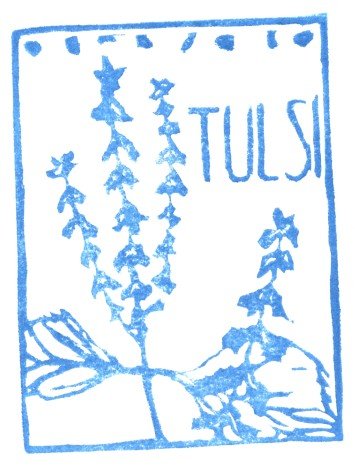
Tulsi
holy basil
Grower: Working Theory Farm - Hillsboro, OR
Profile: These seeds were saved from promiscuously-pollinated Tulsi growing in a no-till environment that demonstrated exceptional hardiness to the elements. Tulsi has been cultivated for over 5000 years for medicine, rituals, and culinary use, and we're honored to contribute this locally-adapted seed to PNW community. The flavor and smell profile of this variety has notes of vanilla, cloves, sweet basil... some might even say Juicy Fruit gum. This Tulsi is bushy and productive, and its flowers attract pollinators in droves.


Cabbage Surprise Grex
Brassica oleracea
Grower: Oak Grove New Urban Farm - Oak Grove, OR
Profile: This is a delightful mix of beautiful cabbages. Yes, you can plant them for spring/summer, but to extend your garden harvest, start seeds in early June and transplant out in mid to late July. You’ll have a beautiful fall and winter cabbage crop. There’s a tiny chance that you’ll get a plant of purple sprouting overwintering broccoli which is harvested in March and April - what a surprise!
Chrysanthemum
shungiku, tong ho, ssuk gat
Grower: Tanager Farm - Corbett, OR
Profile: This chrysanthemum is grown for its greens which are herbaceous, slightly grassy, and tangy in flavor and often steamed, stir fried, or lightly wilted into soups. It is native to the Mediterranean but widely cultivated and naturalized in East Asia. Chrysanthemum can become bitter in the summer and instead enjoys the cool temperatures of the spring and fall.
Collard Grex
Brassica oleracea var. viridis
Grower: Tanager Farm - Corbett, OR
Profile: This collard population includes a diverse range of leaf shapes, colors, and textures, adapted to thrive with minimal inputs in our area. Our Collard Grex started from growing Utopian Seed Project’s Ultracross population alongside our two favorite varieties, Top Bunch and Cascade Glaze. Collards can be sown in spring, but best results are from a mid-summer planting that will mature in fall and become sweeter in frosty temperatures.
Moschata Squash Grex
Cucurbita moschata
Grower: Oak Grove New Urban Farm - Oak Grove, OR
Profile: Moschata is the species of winter squash most famous for including butternut, tromboncino, and many types referred to as calabazas. Moschata may exhibit superior pest and disease resistance, including to the squash vine borer. This collection is grown, tasted, and selected by local community in order to collectively breed a diverse winter squash that tastes great and thrives with minimal inputs. We prefer direct sowing seeds in the ground in May when the soil has consistently warmed up.
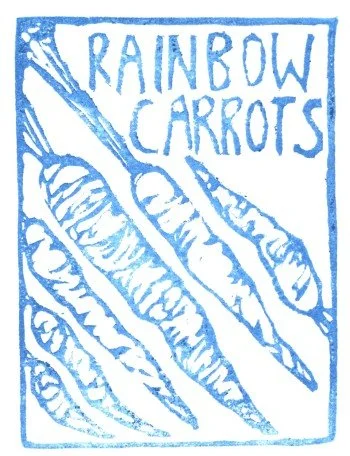
Rainbow Carrots
Daucus carota
Grower: Precious Seedlings Farm - Portland, OR
Profile: These carrots have a satisfying crunch and sweet flavor. The seed crops were encouraged to cross so colors range from yellow to purple to orange, and sometimes even have varying inside core colors. Direct seed no more than 1/4 inch deep and be sure to keep soil wet after seeding. Carrots can take up to two weeks to germinate-- consider covering with a wooden plank until sprouts emerge. Be patient and trust that the carrots want to grow!
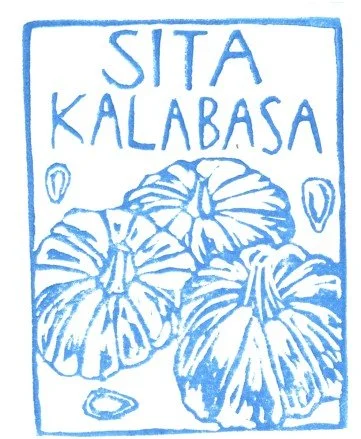
Sita Kalabasa
Grower: Precious Seedlings Farm - Portland, OR
Profile: Peasant farmers in Isabela, Philippines, who are boldly asserting their rights amidst violent attempts at landgrabbing, gifted kalabasa seeds to the PSF farmer in 2024. These seeds are from the first Oregon-grown generation, and despite vast climate differences the plants consistently produced squash that are 15-20lbs, 1ft in diameter, and have a brilliant orange flesh. Harvest when squash skin is dark green and thick. Grow in moderate to full sunlight. If starting indoors, minimize root disturbance when transplanting.
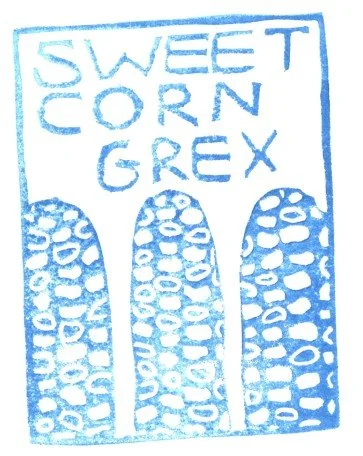
Sweet Corn Grex
Zea mays
Grower: Tanager Farm - Corbett, OR
Profile: Our Sweet Corn Grex is a very diverse population that produces sweet, creamy corn with a range of colors even when harvested early. Sweet corn first originated as a mutation in field corn grown by Indigenous Americans, was heavily cultivated by European settlers, and eventually dominated by industrial ag. We prefer direct sowing corn in mid-spring (around May 1 in Corbett), with a wider spacing of 1-2 feet.
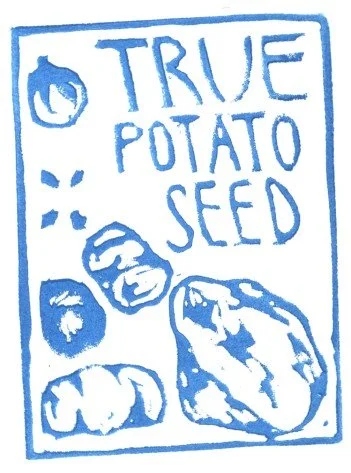
True Potato Seed (TPS)
Solanum tuberosum
Grower: Tanager Farm - Corbett, OR
Profile: Potatoes have been grown as clones from “seed potatoes” for so long that they are losing their ability to produce viable true seeds. This population of True Potato Seeds (TPS) will produce spuds with a range of colors, patterns, and flavors; overall yield may be smaller than clonally grown potatoes, but growers can participate in the important work of returning sexual reproduction to the potato, which allows the plant to continue adapting to pests, disease, and changing climate. Grow TPS just like tomatoes; start in a warm space and up-pot, plant out when at 6-9 in spacing when plants are 4-6 in tall. You can save your own true seeds or clonally replant spuds of your choice.
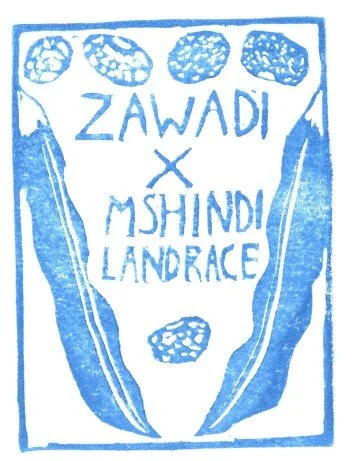
Zawadi X Mshindi
Grower: La Merenda Farm
Profile: This grex / landrace is an evolving crop born from mixing of two other ethereal speckled purple (Zawadi) and pebble gray (Mshindi) bean varieties with origins in East Africa. Zawadi and Mishindi both derive from the East African smallholder-bean tradition. Over the past few years as the bean has adapted to the Pacific Northwest on our farm, it has naturally been able to cross pollinate with other common bean varieties and the colors and patterning of the beans have developed a rich diversity, so expect a lot of variations in seed colour and patterning, ranging from light pink to deep blue and from smooth to mottled patterns. These beans are creamy, with a full-bodied texture, and nutty-sweet flavour and they cook relatively quickly.
Hopi Red & Gold
Amaranthus genus
Grower: Good Rain Farm - Troutdale, OR
Profile: Hopi Red Amaranth is a vibrant, multifunctional plant cultivated for centuries across the Southwest, where amaranth species have been grown and eaten since pre-Colonial times. Traditionally used by Hopi growers for both food and dye, its deep red pigments produce stunning natural colors for fibers, while its tender leaves cook like spinach. The flowerheads hold thousands of tiny seeds that can be cooked into a warm porridge, popped like popcorn, or milled into flour for nutrient-dense baking. This is a generous, resilient plant—and one we grow to keep Indigenous agroecology alive in our region, teaching that one crop can feed, color, nourish, and inspire.
Jacob’s Gold ‘n Cattle
Phaseolus vulgaris
Grower: La Merenda Farm
Profile: This seed population is the result of planting Jacob’s Cattle and Jacob’s Gold together and allowing their colors, genetics, and stories to grow together. Both are Phaseolus vulgaris varieties with origins in North America. Jacob’s Cattle, also known as Trout Bean or Anasazi Cattle Bean gets its name because its pattern resembles the hide of the Hereford cattle and has its origins in the stewardship and care of the Passamaquoddy Indigenous people. Jacob’s Gold is a golden-speckled selection of that same lineage — product of a stabilized cross between the classic “Jacob’s Cattle” and “Paint.” It is a dense and richly textured bean that holds up to long cooking times in soups, stews or baked bean dishes.

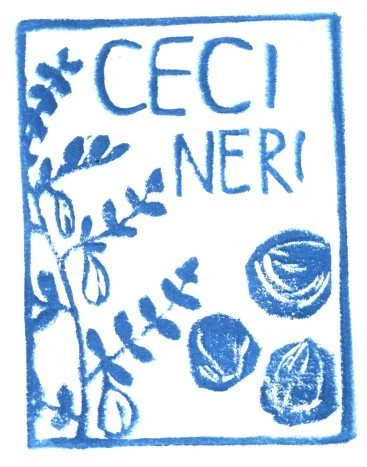
Ceci Neri
Cicer arietinum
Grower: Oak Grove New Urban Farm - Oak Grove, OR
Profile: This is a nuttier type than the common tan chickpea, common in soups and pasta dishes in southern Italy. It is also much smaller and has exceptional structural integrity. Ceci neri was very common until the 1950s when it dwindled in popularity as our agricultural systems worldwide became less and less biodiverse and heirloom plant varieties became rarer. Black chickpeas are commonly grown in the Murgia, a rocky plateau in central Puglia.
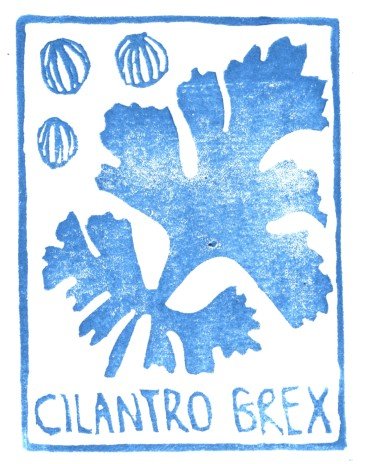
Cilantro Grex
coriander
Grower: Tanager Farm - Corbett, OR
Profile: This cilantro is a diverse population selected for glowing, glossy, green leaves that are flavorful and slow to bolt. Cilantro is native to the Mediterranean and has been adopted all over the world; we are breeding from this diversity to develop a local cultivar. Warm conditions will trigger bolting so we prefer direct sowing cilantro in cool-ish conditions for best results.
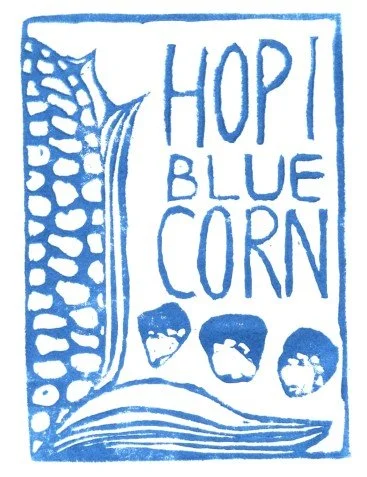
Hopi Blue Corn
Zea mays
Grower: Good Rain Farm - Troutdale, OR
Profile: Hopi Blue Corn is an exceptional flint corn traditionally dry-farmed by the Hopi people in what is now northeastern Arizona, where it has been grown for thousands of years. Deeply tied to ceremony, food sovereignty, and ecological resilience, this corn is known for thriving in arid climates and producing nutrient-dense kernels rich in anthocyanins. It adapts beautifully to the Pacific Northwest and is incredibly versatile—perfect for hominy, cornmeal, tortillas, atole, and even popcorn. At Good Rain Farm, we steward this seed to honor its lineage, help preserve Tribal foodways, and remove the paywalls and scarcity narratives imposed on “rare heirloom” Indigenous crops.
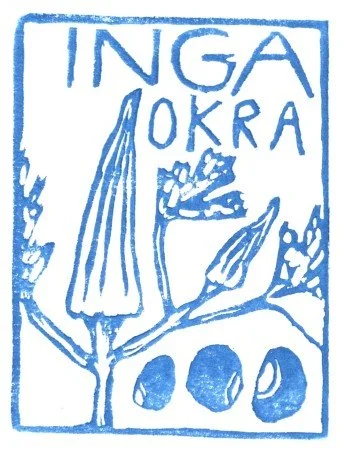
Inga Okra
Abelmoschus esculentus
Grower: Precious Seedlings Farm - Portland, OR
Profile: Peasant farmers in Isabela, Philippines, who are boldly asserting their rights amidst violent attempts at landgrabbing, gifted okra seeds to the PSF farmer in 2024. These seeds are from the first Oregon-grown generation, and despite vast climate differences the plants were abundant when grown in full sun. The okra has a long shape and grows upwards of 6in without getting woody. Start seeds indoors, then transplant out when nighttime temperatures are over 55 degrees.
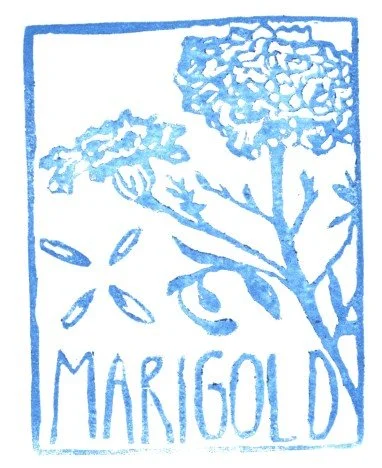
Marigold
Cempasúchil, Tagetes genus
Grower: Working Theory Farm - Hillsboro, OR
Profile: These seeds were saved from open-pollinated marigolds growing in a no-till environment that produced the largest and most colorful blooms throughout the season. Marigold is native to Central America, and holds significance in rituals, ceremonies, and celebrations. Marigold also offers potent medicinal qualities, and its petals can be processed into a rich dye for food or textiles. We recommend starting these seeds indoors and transplanting outdoors by June to experience their blooms by Día de los Muertos.