
Events & Gatherings
Lunar New Year 2026
Jenny and Adrienne hosted a Lunar New Year dinner on February 21, 2026. They are passionate eaters and growers and are working on understanding crop varieties through culinary experimentation.
From Adrienne, on Mustards
Adrienne is a farmer and artist from the suburbs of Portland. She is mixed Chinese and grew up without strong Chinese influence. The process of growing and cooking guides her understanding of her history.
I used to work at a Sichuan restaurant in Seattle run by this very cool Chinese couple. One of my favorite dishes on the menu was suancaiyu, a sour fish stew with pickled mustard. It was unsurprisingly not a common order from most Western customer palettes, but I was fascinated by the serious sour flavor, and the creaminess of the soup that came from the unabashedly fishy broth. But mostly I liked the addition of the pickled mustard. There was something earthy and funky about the flavor that complemented the fish in a kind of bizarre way. It came to represent much of what I enjoyed about Chinese food, its nuances and unique flavor pairings that were removed from its stereotype.
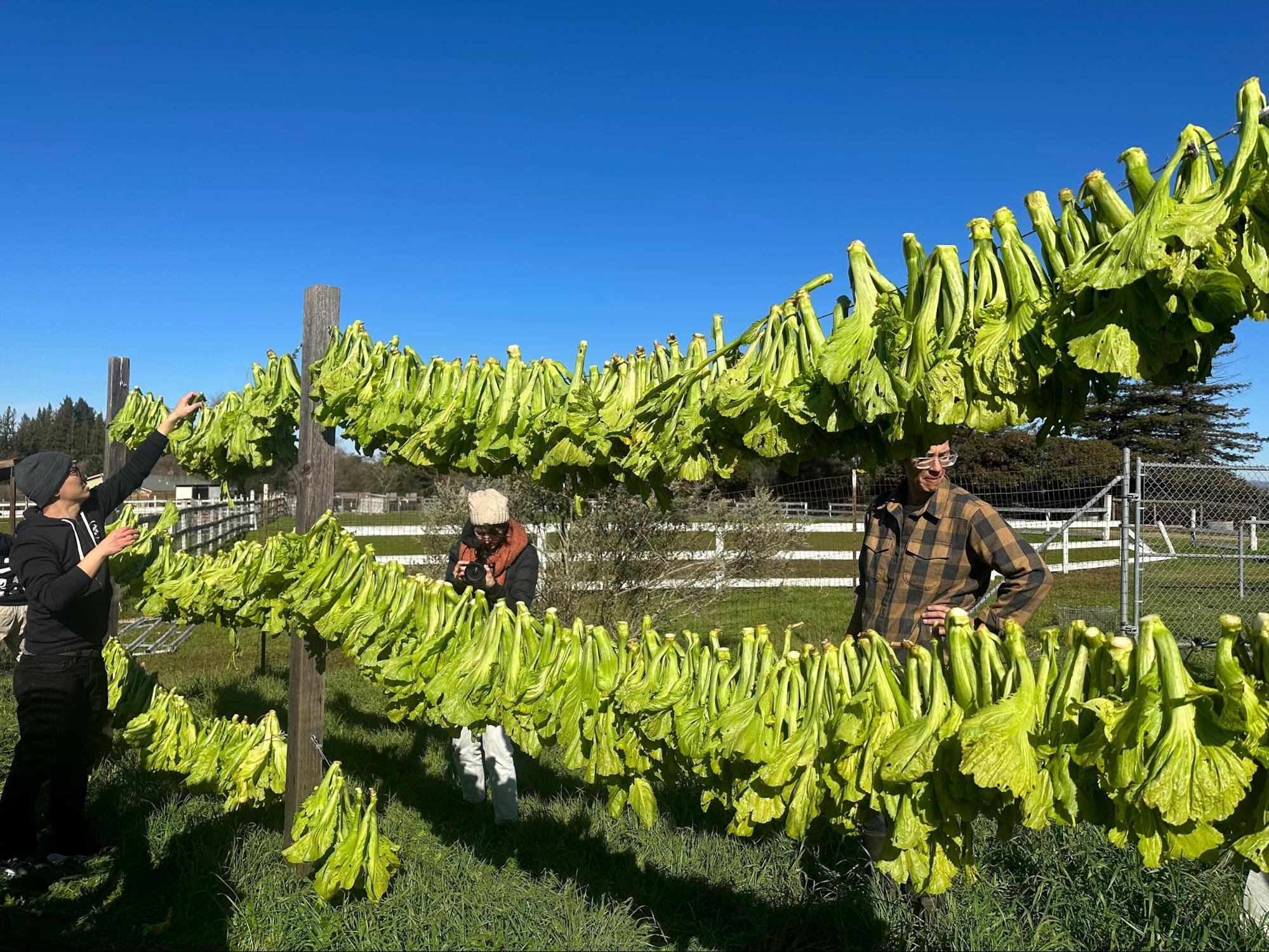
Glowing mustards in Sebastopol, CA, January 2023
I became kind of obsessed with this slow, sour tale of the mustard green. I’ve always liked a stem on a brassica, and was captivated by the thick and muscly stem of this type of mustard, that curved around itself as it grew. When Jenny and I decided we wanted to throw a big Lunar New Year dinner this year, I decided I wanted to grow and ferment mustards and make some kind of funky fishy dish with it. I bought some seeds from True Leaf Market (previously Kitazawa Seeds, the longest running Japanese-owned seed company in the country). After much deliberation, I bought the variety simply called “Chinese mustard” because the picture looked right enough. This variety said it was a fall-planted brassica, but I don’t think I planted them quite early enough, plus our farm has some troubles with brassicas, and they ended up not bulking up enough for the New Year.
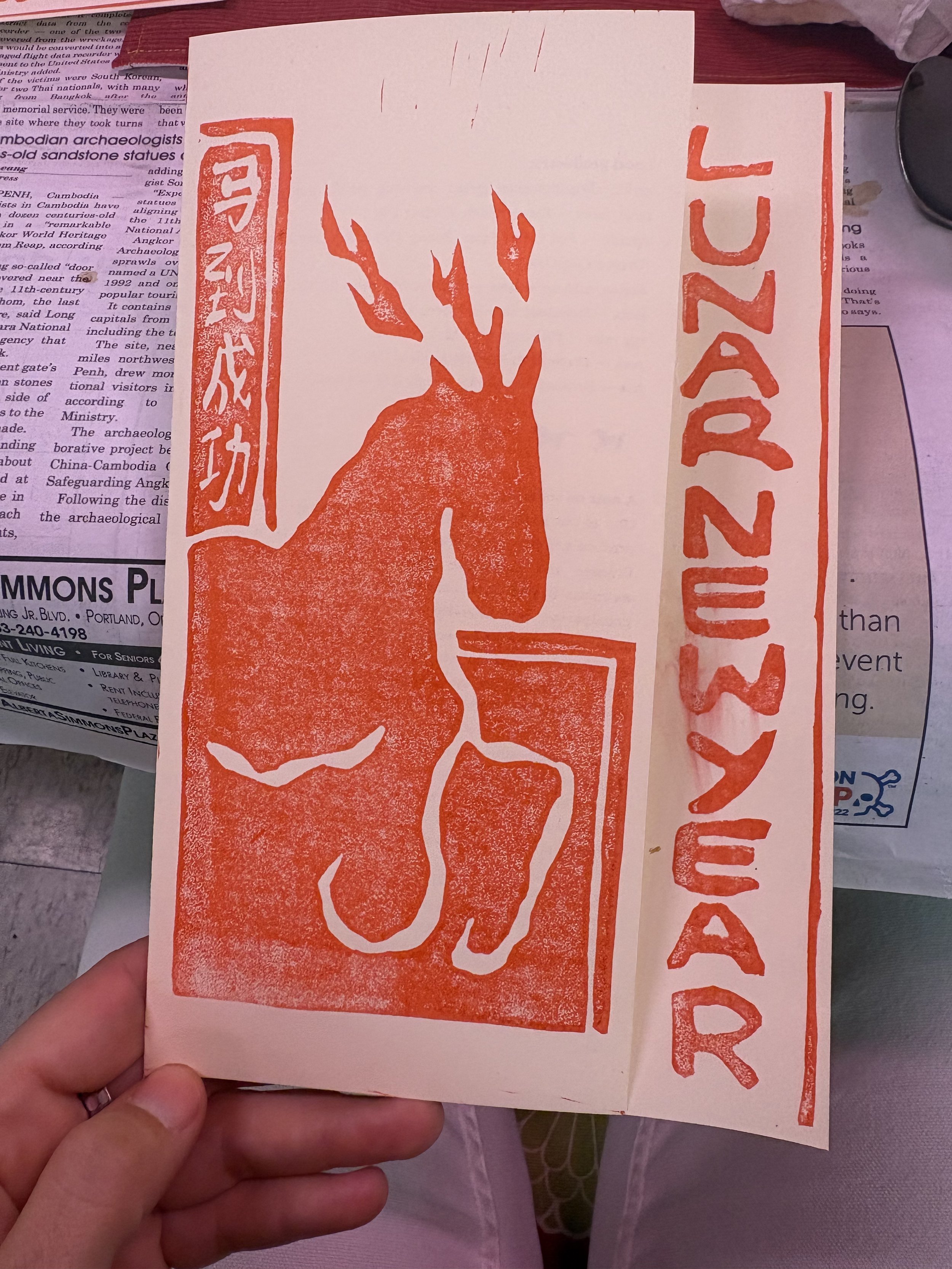
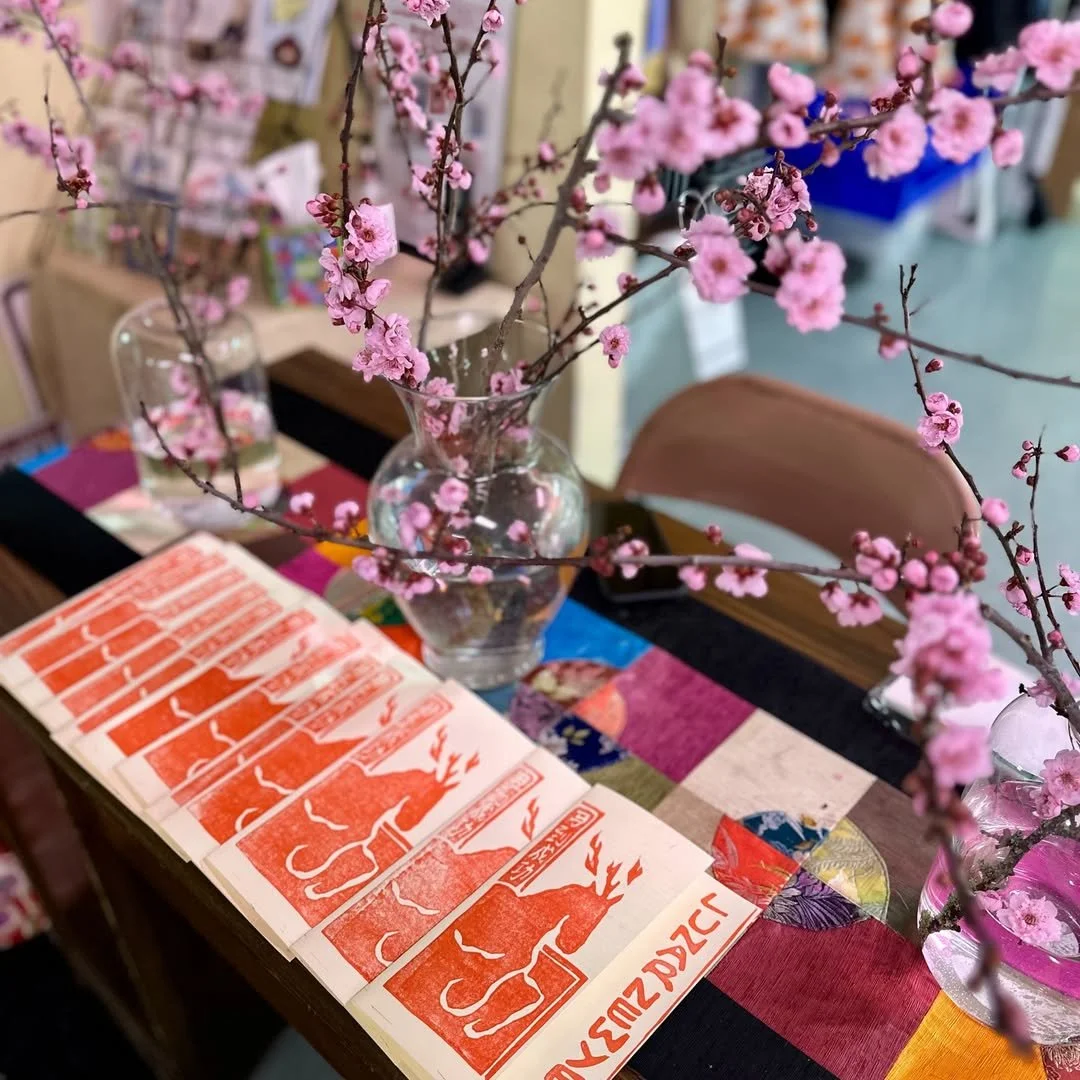
Block print art for our menu
I decided to try my process out with varieties that we’ve grown at Tanager for many years, so many that they tend to self-seed and just pop up as ‘volunteers’ this time of year. Most of these do not have the thick petiole that is coveted in the gaichoy (the Dragon Tongue variety does grow quite big with a thick stem, and with beautiful colorations, a potential for seed breeding projects) and this different stem to leaf ratio affected the water content in the fermentation.
I used the simpler xuecai preparation and made one 16 oz jar. This last batch ended up being used in the dinner itself, alongside the steamed fish and fresh bamboo shoots. It wasn’t suancaiyu and it wasn’t even the ‘right’ mustard variety for the job, but it was very tasty and very fresh.
Jenny and I have since decided to pursue this collaboration of cooking and growing, respectively, foods of the Asian diaspora. My first interests in this project were to explore the concept of growing and cooking food authentically so far away from their points of origin, and whether true authenticity was even possible. Sometimes I doubted the task even further - should I even do this work? How important is it truly to bring this variety across oceans to grow in unfamiliar soil just so I can do some personal cultural reckoning? What am I losing or gaining with the crops of a land I don’t even really know? Is grounding myself in the past keeping me from moving forward into the future?
As my trialing progressed, I began to explore the difference between authentic ingredients and authentic processes. Maybe it is possible to experiment with different inputs as long as I respected and maintained the process. In the many mistakes I made along the way, I realized how green I was in the world of fermentation. In many ways it is the study of process, understanding how human technique interacts with time. Maybe it is a question of paying my respects to this mastery and history before asking to incorporate an entirely new variety.
Or, alternatively, I could work backwards and adapt these recipes to fit new crops. For example, I decided to add an extra step of salting and draining the mustards from Tanager Farm in order to get rid of that varieties’ excess water. It is relatively common to see cookbooks calling for specific, culturally relevant ingredients, only to make a note in the margins allowing for all kinds of substitutions based on what is available. I want to keep recipes accessible and I also think that we lose something when we substitute broccolini for gailan.
All of this deliberation brings me back to seed work, in the end. It is simpler often to return to the first step. How could I take on less of the burden of being the guide - I was always going to be an imperfect guide - and return this autonomy to the seeds?
I am going to save seed from the few Chinese mustard plants that made it through a Corbett winter, symphylans, and bad timing. These may cross with the volunteer mustards we have around the farm - the ones that love to grow here. Brassicas have a far reach when it comes to crossing, and rather than worry too much about this, I’ll work on forgiveness as a part of the process when immigrating something new into a new plot. I found another mustard from a Canadian company that has been bred just for its knobby stem, and I might throw that into my mustard mix too, eventually.
I like the idea of combinations because I have always felt more drawn to nuance, and a belief that the answer lies somewhere in between many other answers. As a mixed person I often feel like an in between answer, and while this sometimes leads to a lack of personal clarity, it also means I am constantly defining what I am. These days I am someone who stewards imperfect mixes of crops from many different places and lovingly observes processes. I am excited to learn about what mustards can teach me this growing season.
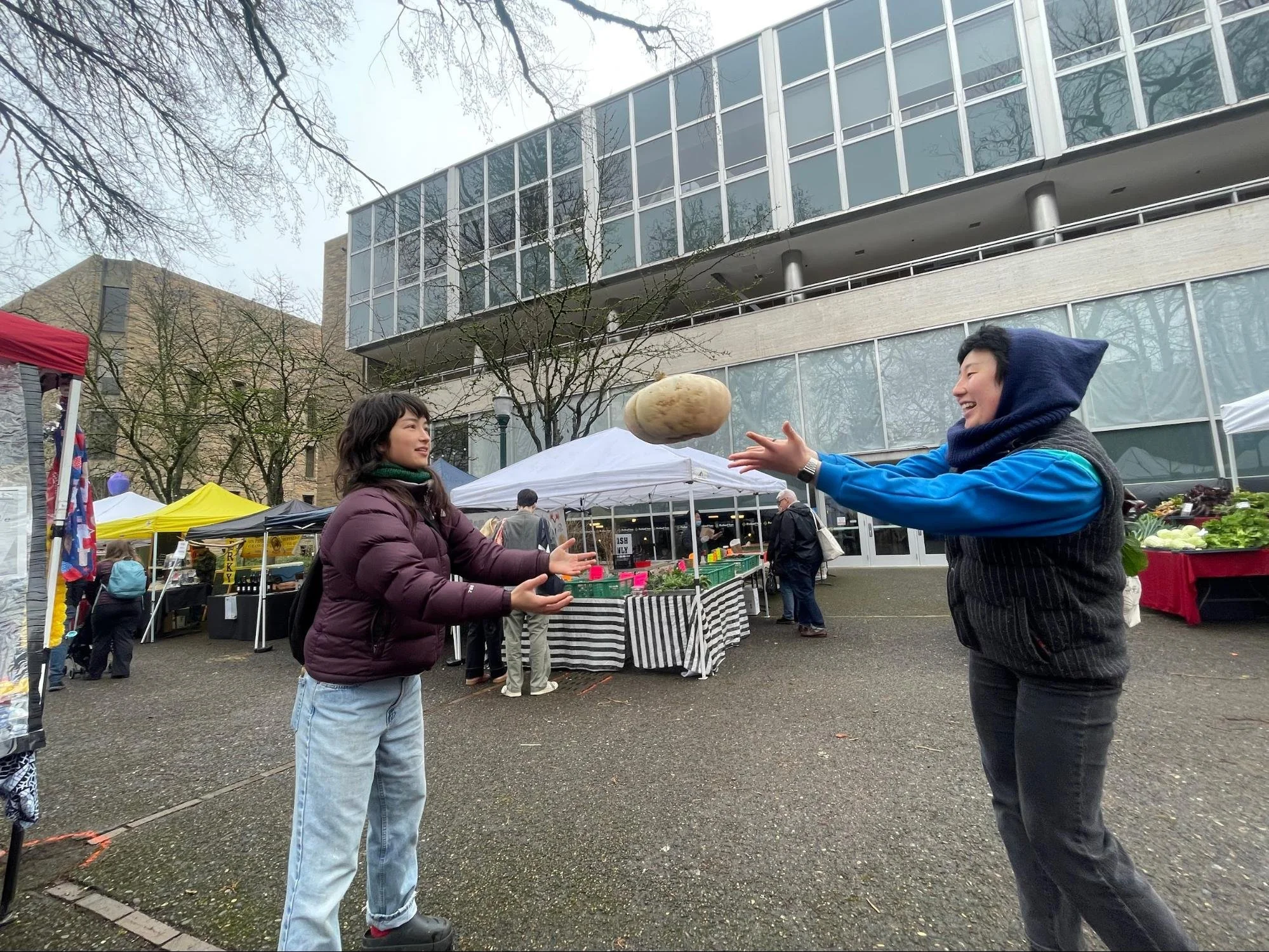
J&A shopping at the farmer’s market for the dinner
Many years later when I later worked at a farm in the North Bay Area that focused on growing Chinese crops, we grew a mustard green that some chefs from the city came up to ferment one day. They made us lunch while we harvested and then, after eating, we all hung them out to dry in the sun for the next two days. When they came to bring them back to the city, they said they would keep them in jars for the rest of the year at least, to stew in their own juices and become something new.
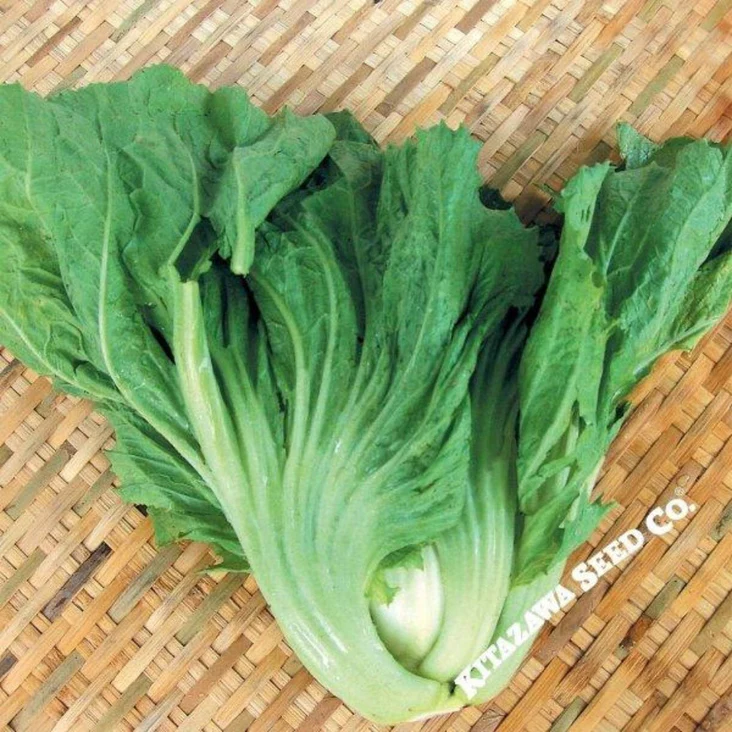
From the Kitazawa catalog, ‘Mustard, Chinese’
I pivoted to buying mustards from Fubonn, again basing my selection off of visual appearance. There it was called 芥菜 gaichoy. They were selling a bag of two or three big heads for around $3. It was the ‘correct’ variety that I needed for the fermentation process, and I successfully tested out a couple types of fermentation using Fubonn’s mustards. Still, there was a part of me that resisted this produce, shipped all the way from China.
At this point I was trying out two different types of processes of fermenting mustards - 酸菜 suancai and 雪菜 xuecai. The more I learned about all of the varied fermented mustards, the more I realized every region tended to have a preference of how they liked to ferment. This was for various reasons, maybe there was more or less moisture in the air, for example, or they couldn’t reliably use the sun for air drying. It made me think about how the diaspora was maybe just another region, and I needed to listen to my own preferences, reflected by the place I am in.
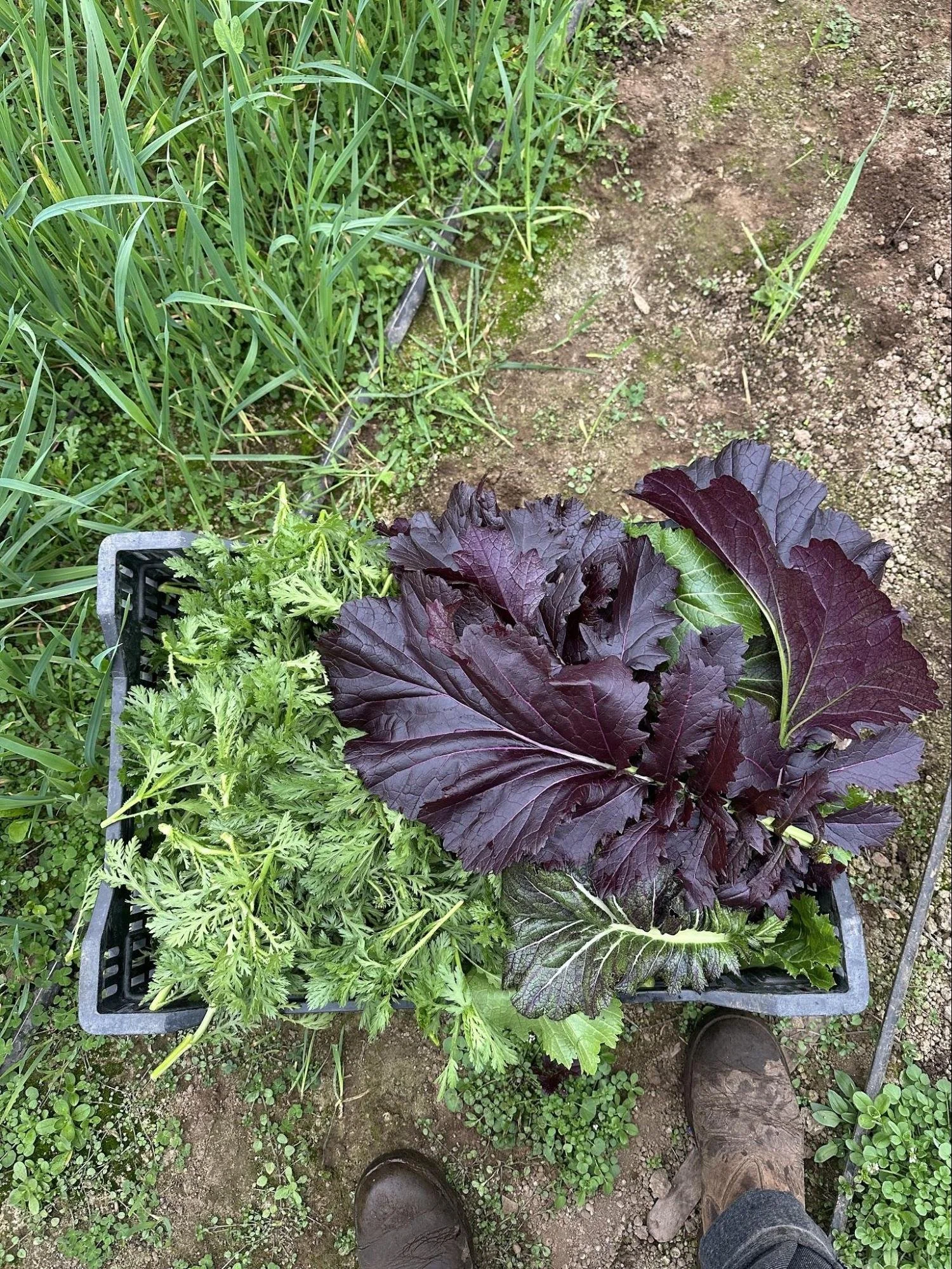
Harvesting for the dinner - chrysanthemum greens and the self-seeding mustards
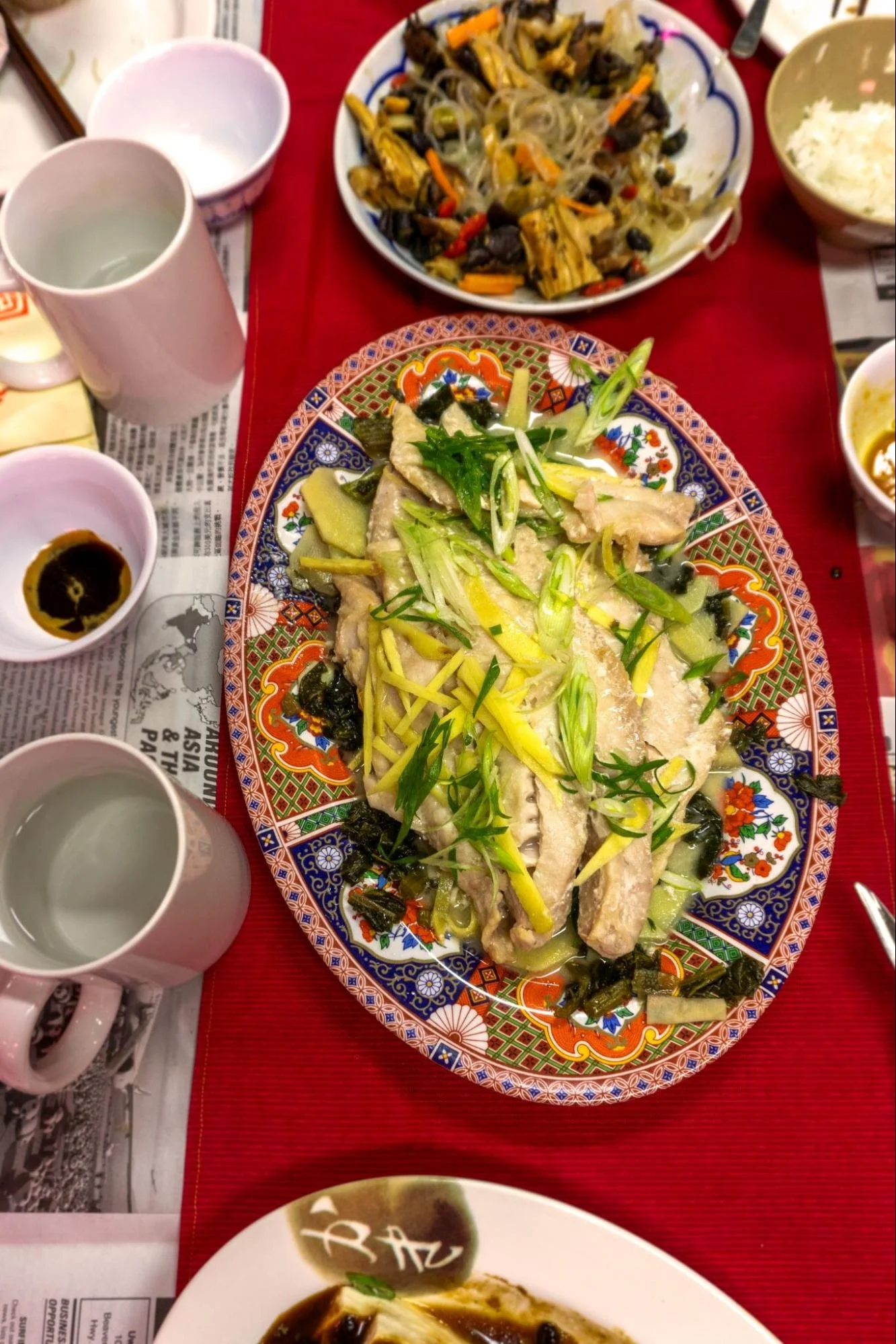
Final dish with steamed rockfish at the Lunar New Year banquet
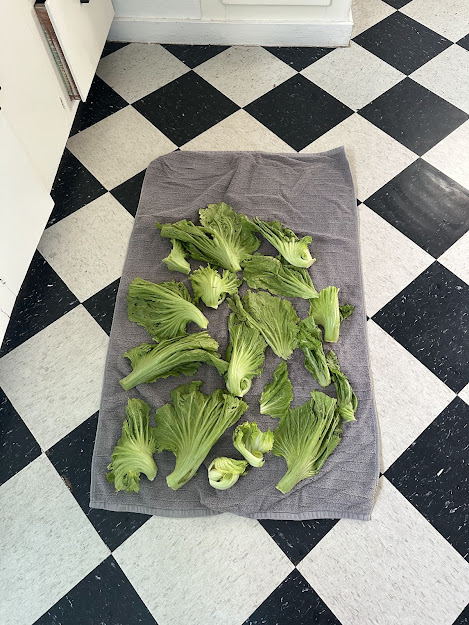
Mustards drying on my kitchen floor
蘿蔔糕 (radish cake) for breakfast and good luck
Jenny Tseng is the daughter of Taiwanese immigrants and a transplant from the Bay Area. She eats, dreams, and plays with foods influenced by the Taiwanese, Chinese, Cantonese, Japanese, and British histories that shape her family’s foodways.
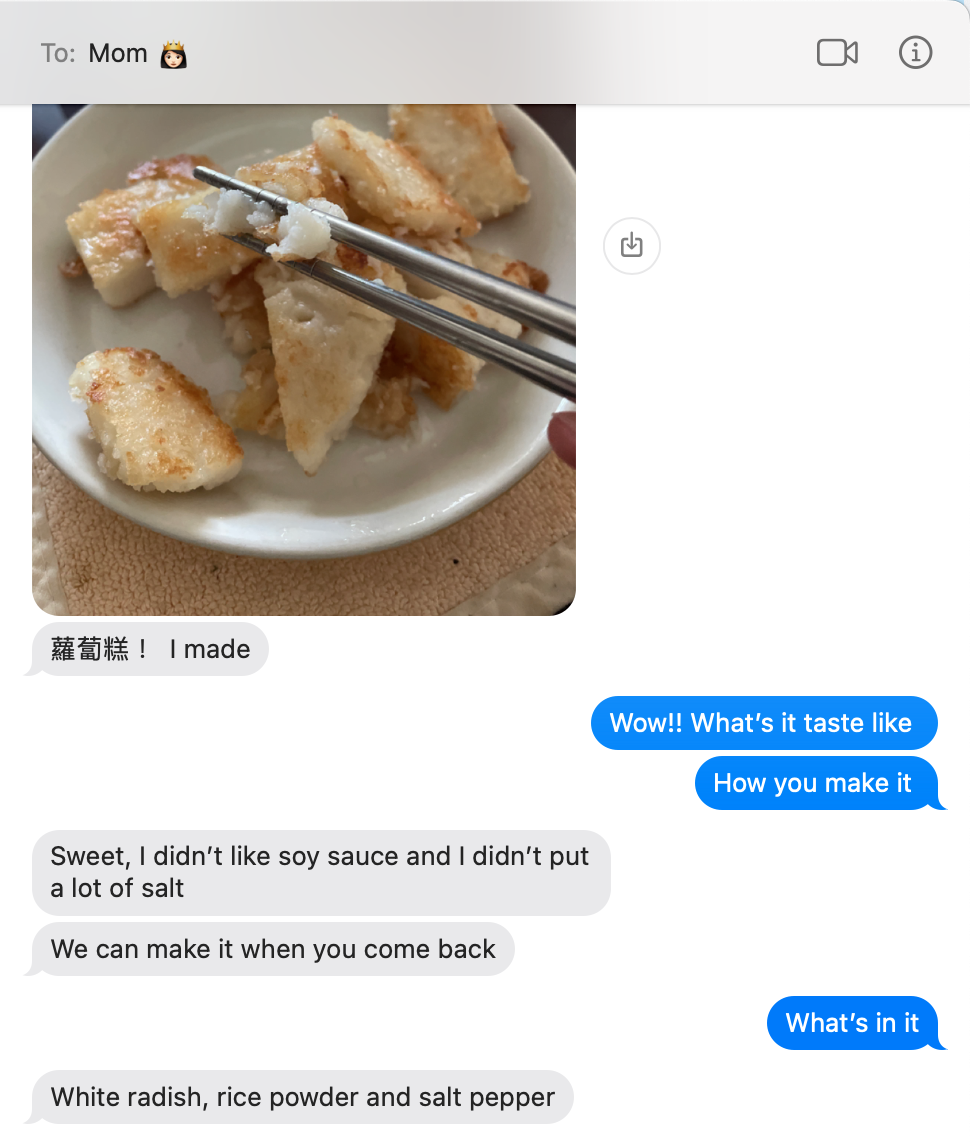
This text from her in 2025 planted the seed for making 蘿蔔糕 for the lunar new year banquet Adrienne and I organized this year to celebrate the year of the fire horse.
My mom messages me three different types of texts.
The first type is just “Hello” with no follow-up texts. This is her way of making sure I am still alive and have not forgotten about her in California. It is her gentle way of asking what I have been so busy with that she has not heard from me in a few days.
The second falls into the health category. Frequently, I will receive advice from her on different ways to move my body in order to improve my health. Now that it’s allergy season, I anticipate texts that remind me how to massage my face in order to relieve congestion.
The third type is related to food. My mom texts me like she is a capsule of my childhood, teaching me how to recreate my comfort foods via a mix of Chinglish texts I need to use Google Translate on and voice memos. Sometimes, she even provides me with a curated list of Youtube videos made by Mandarin-speaking home cooks, videos that would have never gotten through my English search algorithm.
And sometimes, she shares photos of what she has made. I cherish these photos, because it means she has thought of me while cooking. Last winter, she texted me proudly to share a picture of her homemade 蘿蔔糕* (lúo bō gāo, radish cake).
This text from her in 2025 planted the seed for making 蘿蔔糕 for the lunar new year banquet Adrienne and I organized this year to celebrate the year of the fire horse.
[*Google Translate/Pleco translates 糕 to "cake" which is an approximation of the range of foods that 糕 could apply to: cakes, puddings, patties, or other circular and non-circular foods that have no equivalent in English.]
Most of the names of dishes that families eat on lunar new year’s eve are homophones for words associated with good luck, prosperity, and health. Every year, we ate, among a rotation of dishes of my mom’s choosing, a whole fish eaten head to tail and 年糕 (nián gǎo), a steamed dessert made with sticky rice flour.
With these two dishes, we invited fortune and abundance into our upcoming year. The Chinese word for fish (魚, yú) sounds the same as the word for remainder or surplus (餘, yú). Eating an entire fish together is said to bring in good luck from start to finish of the year, as well as bring unity to the entire family. As for 年糕, it is a homophone for 年高, which translates literally to “high year.” By finishing our dinner with 年糕, we welcomed progress and growth for our next year.
In Portland, I confronted messy feelings of imposter syndrome while preparing for the lunar new year banquet. Who was I to gather others to celebrate Lunar New Year when I couldn’t even remember what I was supposed to eat to usher in the new year with good luck, besides the whole fish we always got fried at Ranch 99’s seafood counter and 年糕 studded with red adzuki beans? Besides the fish and the 年糕, I only had a handful of ideas for which auspicious dishes and local ingredients I wanted to share at the banquet. My trip to visit family in Taiwan the month prior to the dinner, however, reminded me again of my mom’s 蘿蔔糕 from the previous year.
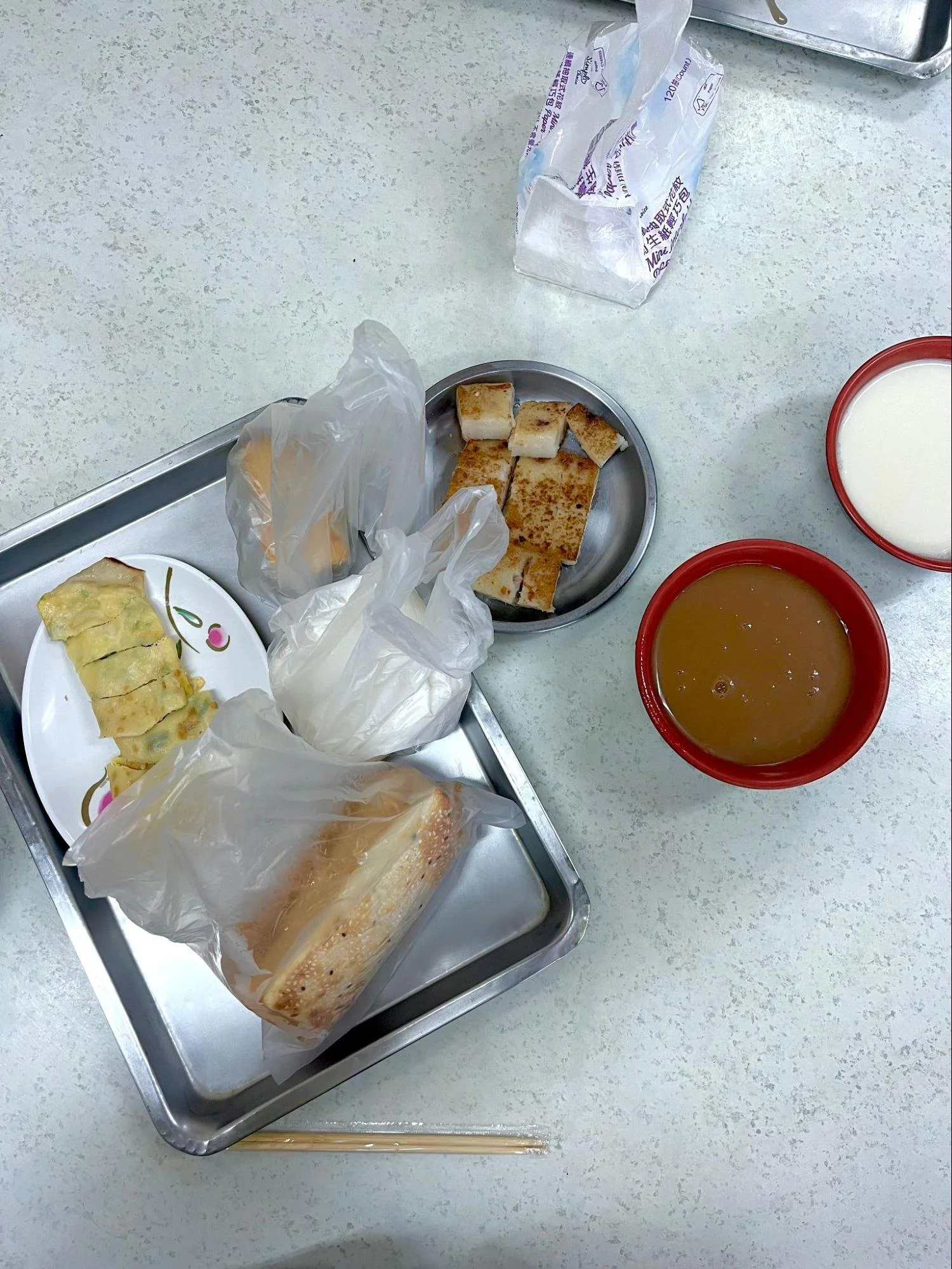
The best 蘿蔔糕 I had in Taiwan, along with 蛋餅 (egg pancake), 紅豆酥餅 (red bean flakey pastry), 饅頭 (steamed bun), 掃餅油條 (sesame flatbread), 米漿 (peanut rice milk), and 豆漿 (soymilk).
When I returned to Portland and recipe testing, I dearly missed starting my day with 蘿蔔糕 that seemed to melt on my tongue. I had hazy memories of seeing abundant radishes of all types at the farmers market and finalized 蘿蔔糕 as an item on our menu that would seamlessly blend a traditional dish with place-based ingredients.
To be cost-savvy as I navigated multiple rounds of recipe testing, I made my initial trials of 蘿蔔糕 with the familiar long and slender Japanese white daikon piled up in a tumble at Fubonn. Using my mom’s trusted recipe as a guide, each trial of 蘿蔔糕 morphed closer and closer to what I had in Taiwan.
Restaurants serving quick, tasty meals are plentiful in Taiwan. Nearly every morning, my family and I walked not more than a handful of blocks to a 豆漿店 (dòu jiāng diàn). These soy milk shops serve large bowls of scalding soy milk or the sweetened roasted peanut rice drink 米漿 (mĩ jiāng), along with other traditional Taiwanese breakfast fare like 蛋餅 (dàn bǐng), 燒餅油條 (shāo bǐng yóu tiǎo), 包子 (báo zhǐ), and 蘿蔔糕.
This last dish was a constant in my breakfast spread, as one of my few gluten-free options. It looks unassuming, a few squares of white pan-fried to a golden crisp and usually served with a saucer of sweetened soy paste. The main ingredients are simple: grated daikon, white rice flour, white pepper, and salt. Stir-frying then steaming these ingredients together turns them into a smooth, tender showcase of the sweet peppery bite of radish.
蘿蔔糕 is a relatively new breakfast dish in Taiwan. Both my parents don’t remember eating it at the 豆漿店 of their childhoods. For my dad, who was born in Taiwan and grew up in Hong Kong, he says he sees the dish more like a snack or a small plate, which fits his Cantonese-shaped foodways. Nowadays, 蘿蔔糕 is a dish often eaten at dim sum, a meal associated with Cantonese cuisine. For my mom, who was born and raised in Taiwan, she only recalls eating 蘿蔔糕 for the new year.
The name of the dish is another homophone. The first two words “蘿蔔” mean white radish, which are also called 彩頭 (cái tǒu). 彩頭 is a homophone for good luck in Taiwanese Hokkien*.
[*The language spoken in Taiwan alongside Mandarin, a variety of indigenous languages, and Japanese (a remnant of Japanese colonization). Its roots are born from Minnan immigrants of southern Fujian, whose descendants make up the largest ethnic group on the island.]
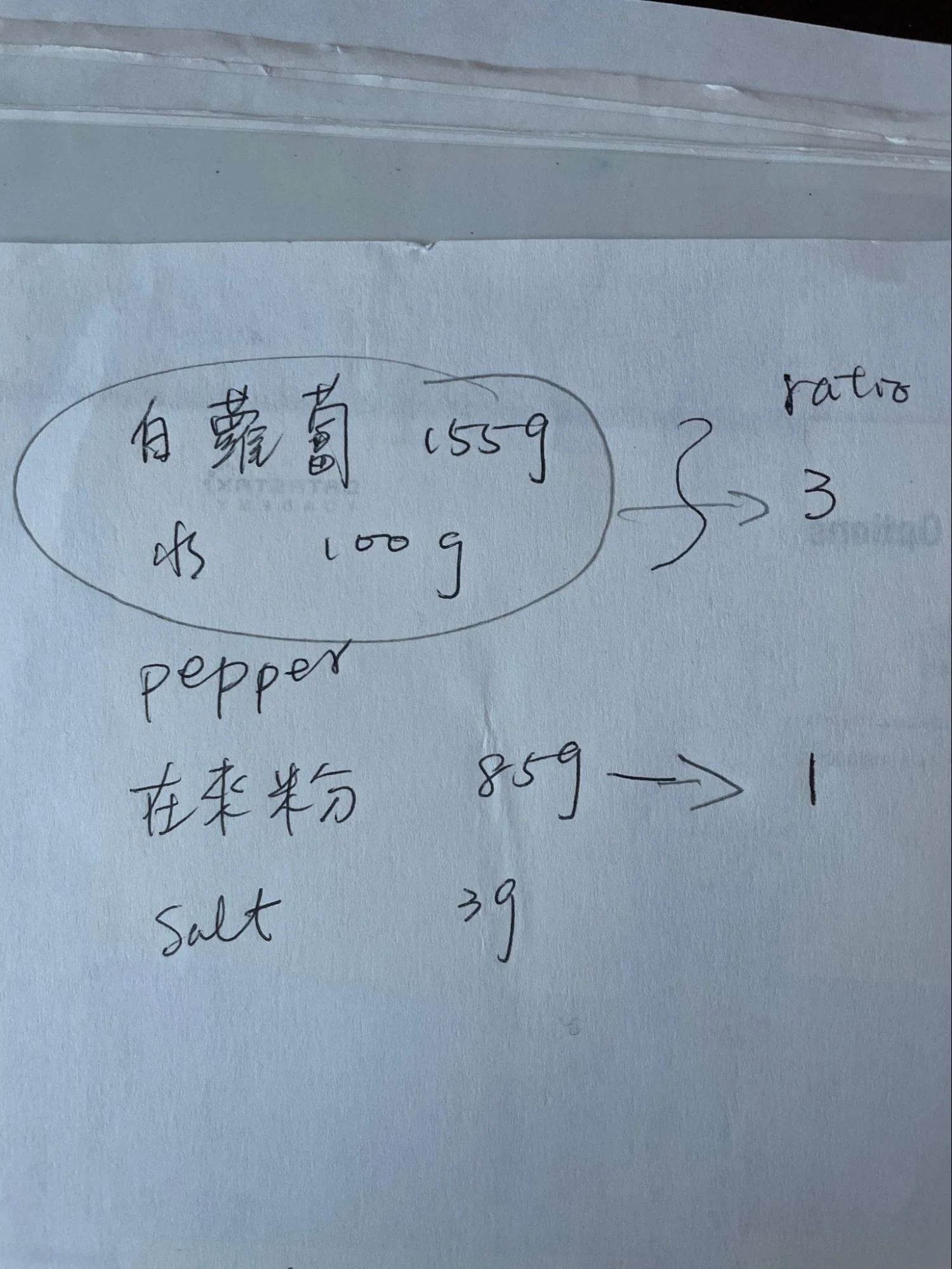
My mom had to walk me through her 蘿蔔糕 recipe on the phone
As the dinner drew closer, I started searching for local white daikon to cook with. Instead, Adrienne and farmers at the market pointed me to stout green-white or dark green daikons, explaining that the white daikon that Fubonn had in plentiful, year-round supply were in neither plentiful nor year-round supply in our region.
I resigned myself to using the closest approximation to white daikon, the alpine Korean daikon which is thicker and has a light green top. Making 蘿蔔糕 with the alpine daikon yielded 糕 with a sharper, more radish-forward punch. I missed the mild, sweet taste of the white daikon. The biting smell wafting up from the ten pounds of alpine daikon I grated for the dinner was a persistent reminder that this dish would be different from that of my breakfasts in Taiwan.
I can say the 蘿蔔糕 was a banquet success only because of the guests who told us how much they enjoyed it. I had to resist the urge to tell them that the dish they ate wasn’t the 蘿蔔糕 of my Taiwanese breakfasts, to squash down the panicked words “this isn’t what I wanted to show you!” with a gracious thank you instead.
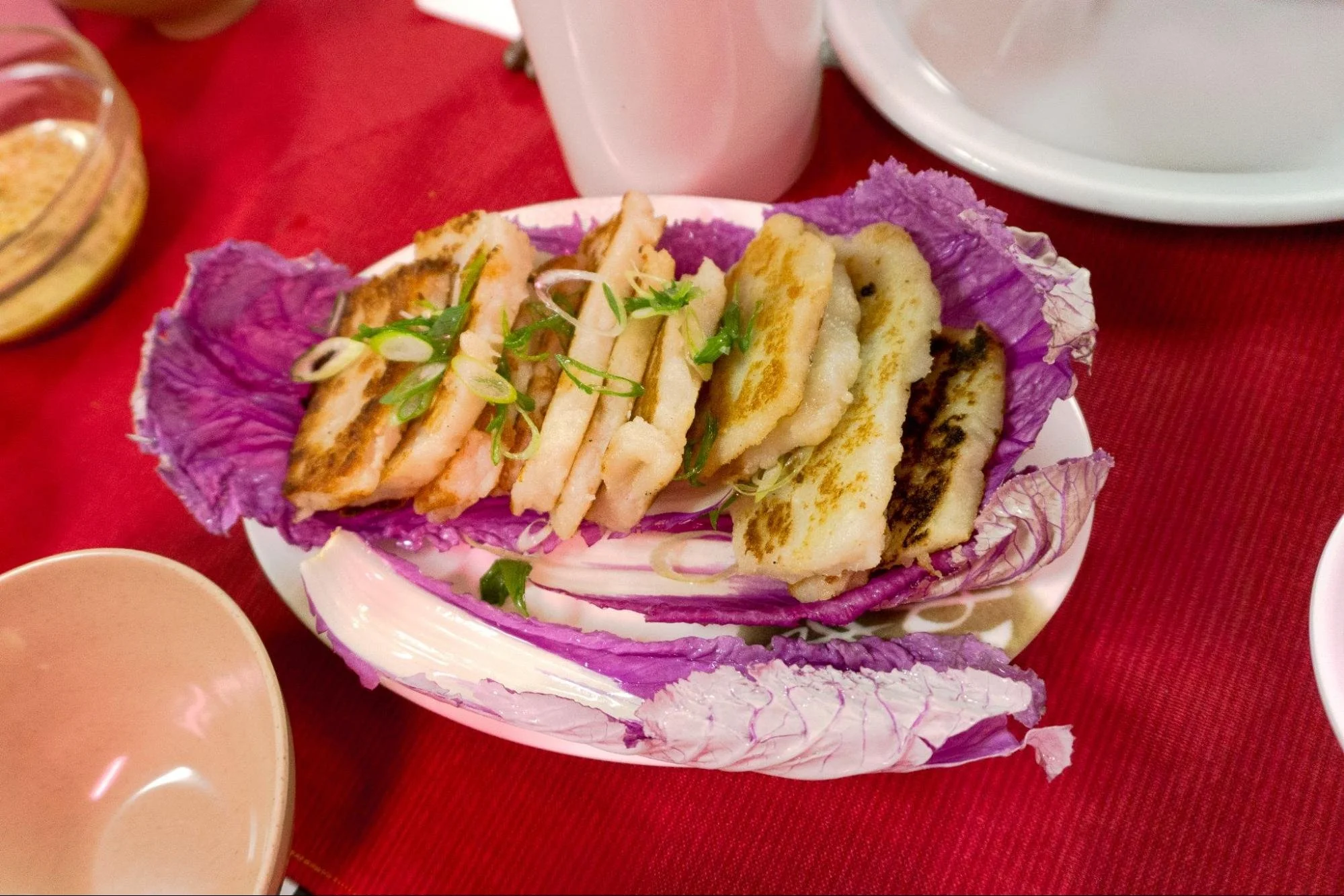
蘿蔔糕 at our lunar new year dinner
Through using alpine daikon, I reluctantly leaned into the tension of what it means to cook culturally relevant dishes using local ingredients. Oftentimes, I can only make the dishes that remind me of home using ingredients imported across the Pacific Ocean. Supporting my local food system means adjusting recipes and staying curious about ingredient swaps. It is a practice and lesson in accepting and celebrating the different flavors that arise from using local ingredients.
For as much delight I can have in creating something new with traditional recipes and local produce, there is equal pang for the familiar. Swapping in locally grown varieties of daikon into my medicinal soups, my 菜脯 (cài bò, dried daikon), and other dishes doesn’t always soothe my craving for home and my parents’ cooking.
It is a joy for me to buy Asian veggies at the farmers market when they are available (even when they are advertised as tasting “just like spinach!”). Like many others in the diaspora, food is a common language for me and my extended family. The work that Adrienne and other producers in the area are doing to grow and raise culturally specific food is so important for those in the diaspora to connect with their heritage in a way that reflects the current land that they reside on.
We closed the banquet dinner by inviting our guests to reflect on the ways in which our local food system can reflect and play a role in their own stories and culture. Gathering together to storytell and share cultural foods is a precious act of preservation against cultural erasure, whether through forced or chosen migrations. The ability to cook food that reminds us of home does not have to be limited by what our ethnic grocery stores carry — with our local producers, we can have all that we need to make dishes that preserve cultural traditions and celebrate diasporic creativity.